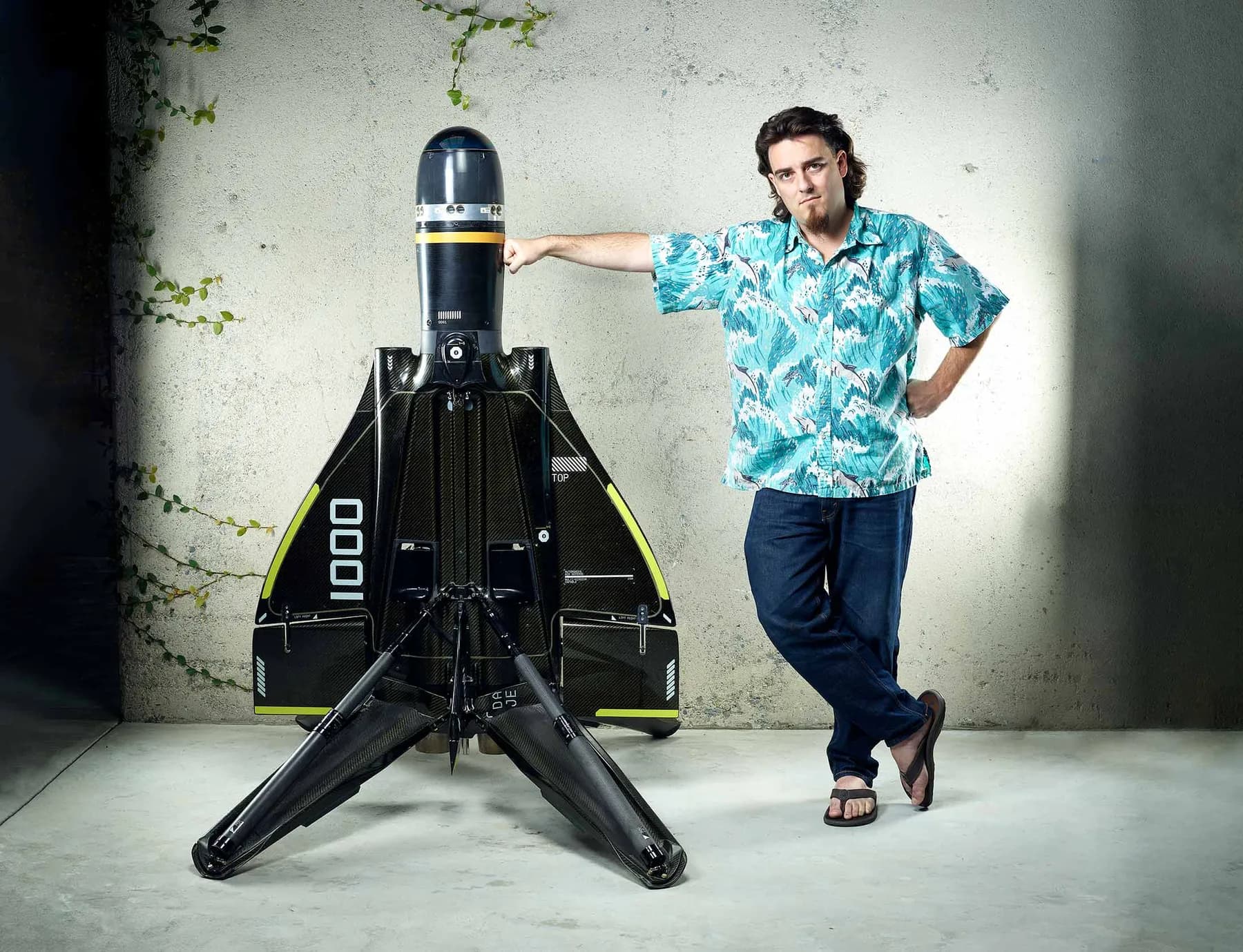
Everything Palmer Luckey has built was first described in science fiction. Neal Stephenson's Snow Crash was published in 1992. Twenty years later, a teenage Luckey assembled the first prototype of the Oculus Rift in a camper trailer parked in his parents' driveway. Lattice, the AI platform that coordinates every weapon Anduril makes, was inspired by Laplace's demon – an 1814 thought experiment about an intelligence that could predict the entire future of the universe if it knew the position and velocity of every atom.
The company itself is named after Aragorn's sword in The Lord of the Rings. In Tolkien's Elvish, Andúril means “Flame of the West.” Nine years ago, Anduril didn't exist. This year, the U.S. Army awarded the company a single contract worth up to $20 billion.
This is the story of how it was built.
America Doesn't Have Enough Stuff
Over decades, the American defense industrial base has calcified into a system that produces fewer weapons, at greater cost, on longer timelines. The F-35 program started in 2001, has consumed over $400 billion and didn't achieve full-rate production until 2024. The Columbia-class submarine is years late and billions over budget. The Army's Future Combat Systems program burned through $18 billion before being canceled in 2009; its successor has been canceled and restarted twice more under two different names.
Chris Brose, Anduril's Chief Strategy Officer and a former staff director of the Senate Armed Services Committee, spent years watching this from the inside. “The fundamental issue is that the U.S. has gotten trapped in a model of building small numbers of exquisite, incredibly expensive platforms over incredibly long timelines,” he says. “And the result is that America doesn't have enough stuff.”
Today's procurement system traces back to World War II. The government had to convert automotive and industrial factories into weapons production overnight, but nationalizing them was politically impossible. So they settled on cost-plus contracting: the government would pay manufacturers whatever it cost to build the weapons, plus a fixed margin on top. If Ford had never built a tank before, they didn't need to guess at a price. The government would cover whatever it cost and guarantee a return. That was a reasonable way to mobilize an industrial base in the middle of a fight for national survival, but the system was never dismantled. After the war, Robert McNamara (who had been president of Ford Motor Company) became Kennedy's Secretary of Defense and formalized the wartime procurement model into permanent policy. The result, as the historian Charles Ries observed, was “almost socialist in its metaphysics.” The system designed for wartime emergency became the permanent way America buys weapons: a small number of planners at the top decide what gets built, how much it costs, and how long it takes.

The defense primes (Lockheed, Boeing, Raytheon, Northrop Grumman, General Dynamics) are large organizations full of talented people operating rationally inside a broken incentive structure. Go over budget and you earn more; finish early and you have nothing left to bill for. The result is that the companies building America's weapons have no incentive to rethink what they're building. They're only incentivized to build more of it, more slowly, at greater cost. As Palantir CEO Alex Karp writes in The Technological Republic: “Our entire defense establishment and military procurement complex were built to supply soldiers for a type of war — on grand battlefields and with clashes of masses of humans — that may never again be fought. This next era of conflict will be won or lost with software.”
The Fellowship of the Flame
As a kid, Palmer Luckey's hero was Seto Kaiba from Yu-Gi-Oh! – an orphan who inherits a weapons manufacturing empire and uses the money to build virtual reality games. He keeps a Kaiba figurine on his office mantel. Luckey's career followed the same arc in reverse: he built a virtual reality empire, then turned to weapons.
Luckey sold Oculus to Facebook for $2 billion at twenty-two. Two years later, Facebook fired him over a $9,000 donation to a pro-Trump political group (though the company has always denied it). He left Silicon Valley with hundreds of millions of dollars and a chip on his shoulder. “My gears were ground,” he told 60 Minutes. “I really wanted to prove that I was somebody, that I was not a one-hit wonder, and that I still had it in me to do big things.”
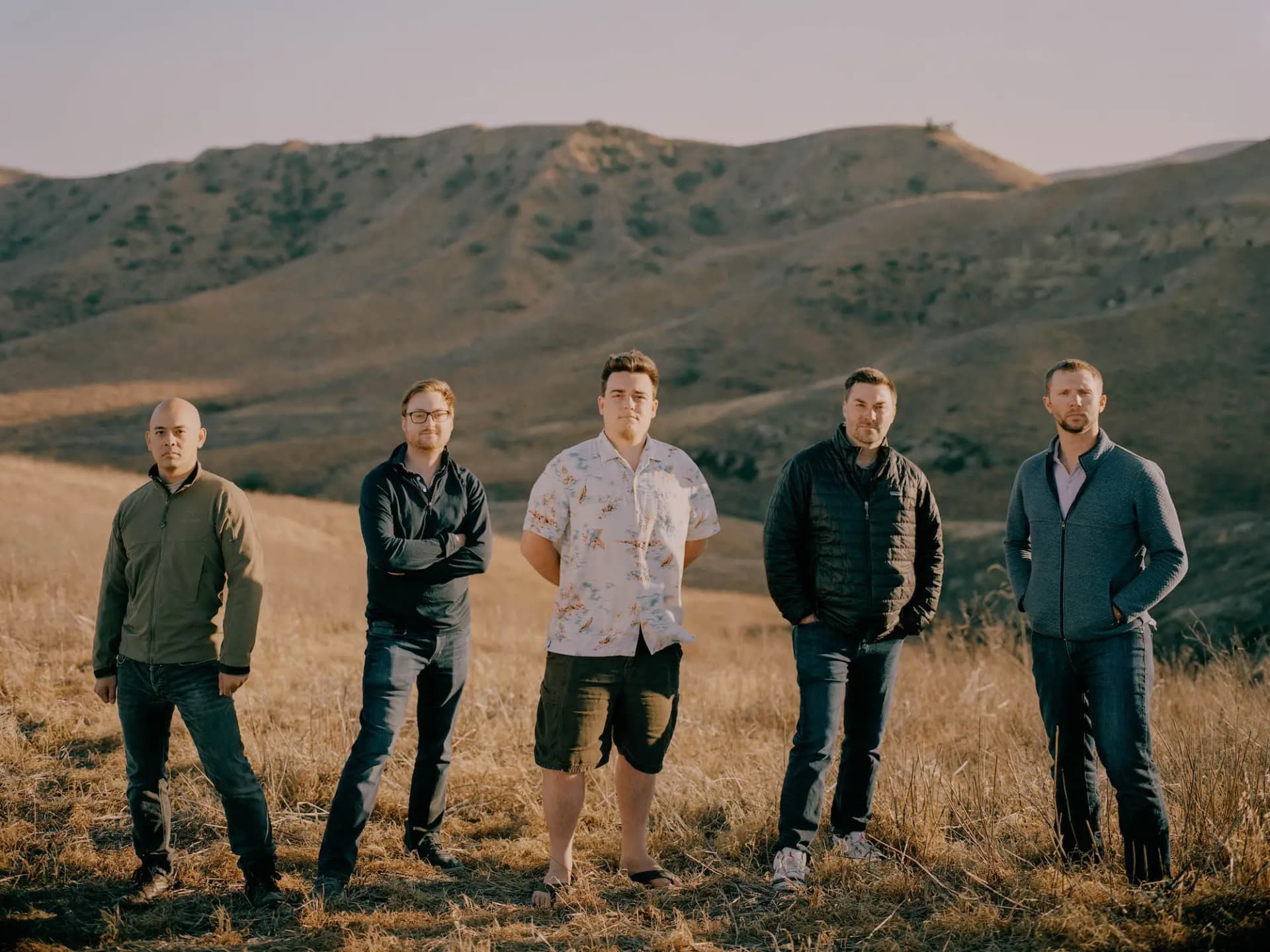
Trae Stephens, a partner at Founders Fund who had worked at Palantir and led the DoD transition team, had been developing a thesis on the broken state of defense contracting for years. He pitched Luckey on the idea of a modern defense company as early as 2014, but Luckey was still committed to VR. When Facebook pushed Luckey out, he reconnected with Stephens. They put together a bare-bones pitch deck and presented it to a handpicked group of top engineers from Palantir, SpaceX, Tesla, and Oculus. Nearly all of Anduril's first dozen employees came from that room. But they still needed a CEO, and Stephens had the perfect candidate in mind.
Brian Schimpf was the Director of Engineering at Palantir, where he led hundreds of engineers building the company's commercial software platform. He and Matt Grimm – another Palantir engineer who would become an Anduril co-founder – had been close friends since their undergraduate days at Cornell, where they built an autonomous vehicle together for the DARPA Grand Challenge and drove it through the Mojave Desert in 2005. “I was absolutely convinced from day one that Brian needed to be the CEO of the company,” Stephens would later say. “There was no alternative.”
Schimpf took some convincing. He was running engineering at Palantir, a company worth $20 billion at the time that was reshaping how the CIA and military used software. But the pitch was hard to resist: the most ambitious idea, the best founding team, and the best funding story you could possibly assemble. “There's no bigger swing,” Schimpf told Arena Magazine.
They recruited Grimm and Joe Chen (one of the first engineers at Oculus) and called the company Anduril Industries. As Luckey likes to point out: a Tesla has better AI than any U.S. military aircraft, and a Roomba has better autonomous navigation than most Pentagon weapons systems. The consumer tech industry had spent twenty years building every component a modern weapon needs – machine learning, computer vision, sensor fusion, mesh networking – and nobody with venture funding had tried to assemble those pieces into actual weapons and sell them as finished products. Anduril would be the first.
The First Tower
Anduril was incorporated in June 2017. That same month, Luckey and his team pitched Customs and Border Protection (CBP) on autonomous surveillance. At the time, CBP used cameras, radars, and several agents sitting behind video screens with joysticks. It was easy to miss things and very manpower-intensive. Anduril's offer was different from anything CBP was used to hearing: Anduril would build the system on its own dime, and CBP could test it without committing taxpayer money to a decade-long development program. “The problem,” Luckey has said, “is that they say, ‘How can we develop this product in such a way that congressmen can't vote to kill it?’ And our answer is: Don't rely on money from congressmen to get the thing built. Use your own money.”
Within a year, they built their first product: a 33-foot, solar-powered surveillance tower that uses computer vision to autonomously detect and classify people, vehicles, and drones, then alerts agents in real time. It fits in a pickup truck and assembles in under two hours.
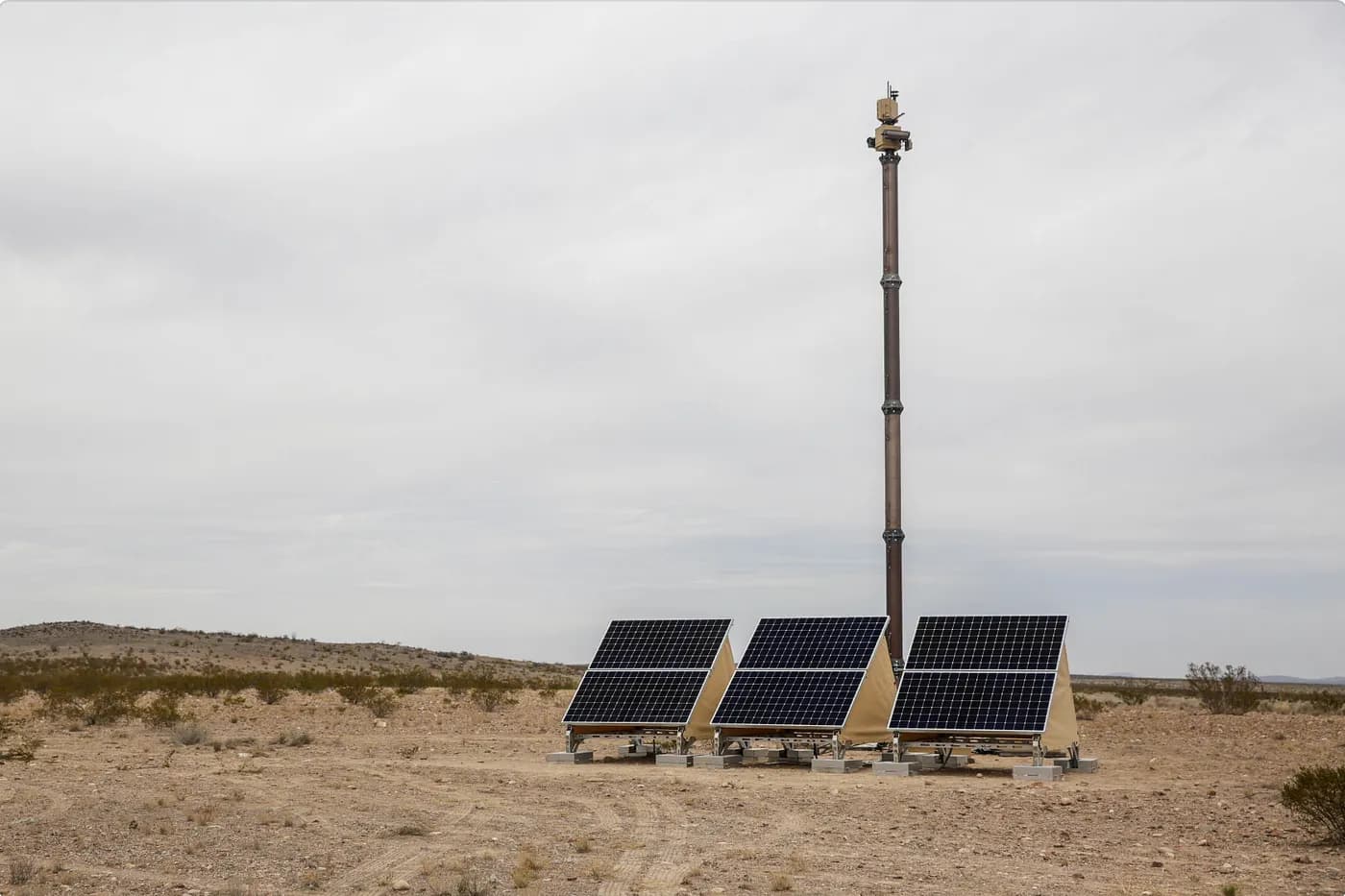
Brian Schimpf wrote much of the software himself. In his first weeks as CEO, he was driving ATVs through mud in the high desert north of Los Angeles to test the towers personally. “The CEO was not above driving an ATV in the mud to get to the tower to do the tests,” said Jason Levin, Anduril's SVP of Engineering. “Nothing's above or below anybody.” That culture became foundational.
They tested the tower on a rancher's land in Texas, and in its first twelve days of operation, it led to 55 apprehensions.
CBP bought four towers. Then thirty. Then two hundred. By late 2024, Anduril had deployed its 300th tower along the southern border. The contract grew to $250 million, and the Sentry Tower became a CBP program of record — the agency's formal commitment to it as a long-term capability. Becoming a full-scale program of record in three years was one of the fastest case studies in federal government history. The Marines followed, deploying Sentry towers at installations in Arizona, Japan, and Hawaii. The UK Ministry of Defence deployed them at bases in Cyprus. Oil and gas facilities and nuclear power plants bought them for perimeter surveillance. A product built to watch the border turned out to be a product the entire national security apparatus needed.
The Lattice Flywheel
Their second system took a similar path to production. They observed that most counter-drone technology at the time relied on jamming or intercepting communications, which would stop working as soon as adversaries found workarounds. Anduril's proposed solution was a fast racing quadcopter that physically knocks enemy drones out of the sky. They built a proof of concept in about 12 weeks, entered a fly-off sponsored by the Defense Innovation Unit, and placed among the top systems there. Within two and a half years, their counter-drone system – later called Anvil – was a program of record.
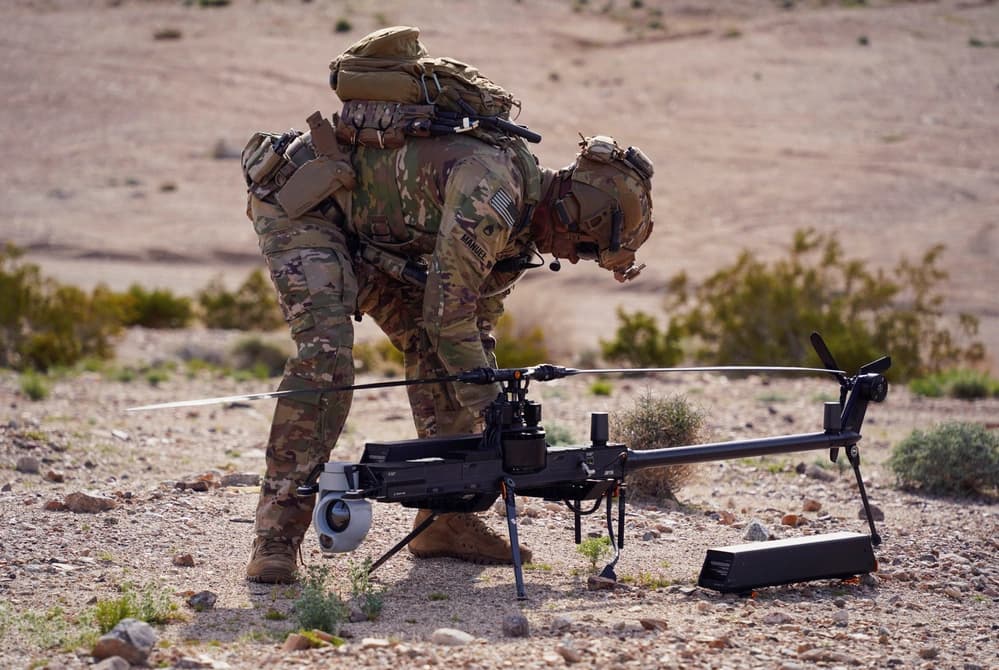
Next was Ghost, a near-silent reconnaissance drone with 100 minutes of flight time. All three of their first products – the Sentry towers, Anvil, and Ghost – plugged into the Lattice software platform. A Sentry tower detects a threat, Lattice classifies it and presents options to the operator, Anvil launches to intercept. A tower spots movement, Ghost flies to investigate. All three products can be controlled with one interface and one operator. Each new product made the others more useful.
This pattern — build hardware, plug it into Lattice, sell through existing government trust, let each product strengthen every other product — is what turned Anduril from a border security startup into a $60 billion defense company. They didn't try to win a massive contract on day one. They started with a tower on a rancher's fence, proved it worked, and let traction build the case.
There were also technical synergies between products. To solve the communication challenges of the remote southern border, Schimpf and his team engineered and patented a mesh networking system. If even one Sentry tower stays connected to the internet, every tower in the mesh stays connected. That infrastructure, built to solve a border surveillance problem, now runs inside Anduril's submarines and jet fighters.
From the border, the pattern expanded. In April 2021, Anduril acquired Area-I, gaining a tube-launched drone called Altius that could be deployed from C-130 aircraft, helicopters, and ground vehicles — and immediately plugged it into Lattice. In February 2022, they acquired Dive Technologies and its autonomous submarine. Three months later, the Royal Australian Navy signed a $100 million contract for extra-large autonomous undersea vehicles. Each acquisition followed the same logic: find proven hardware that fills a gap in a domain the military needs, connect it to the platform, and sell it through the trust Anduril has already built. As Stephens put it, “We don't want to just acquire your company and shut it down. We want to take the best ideas and technologies and use our business development strategy and pour jet fuel on it.”
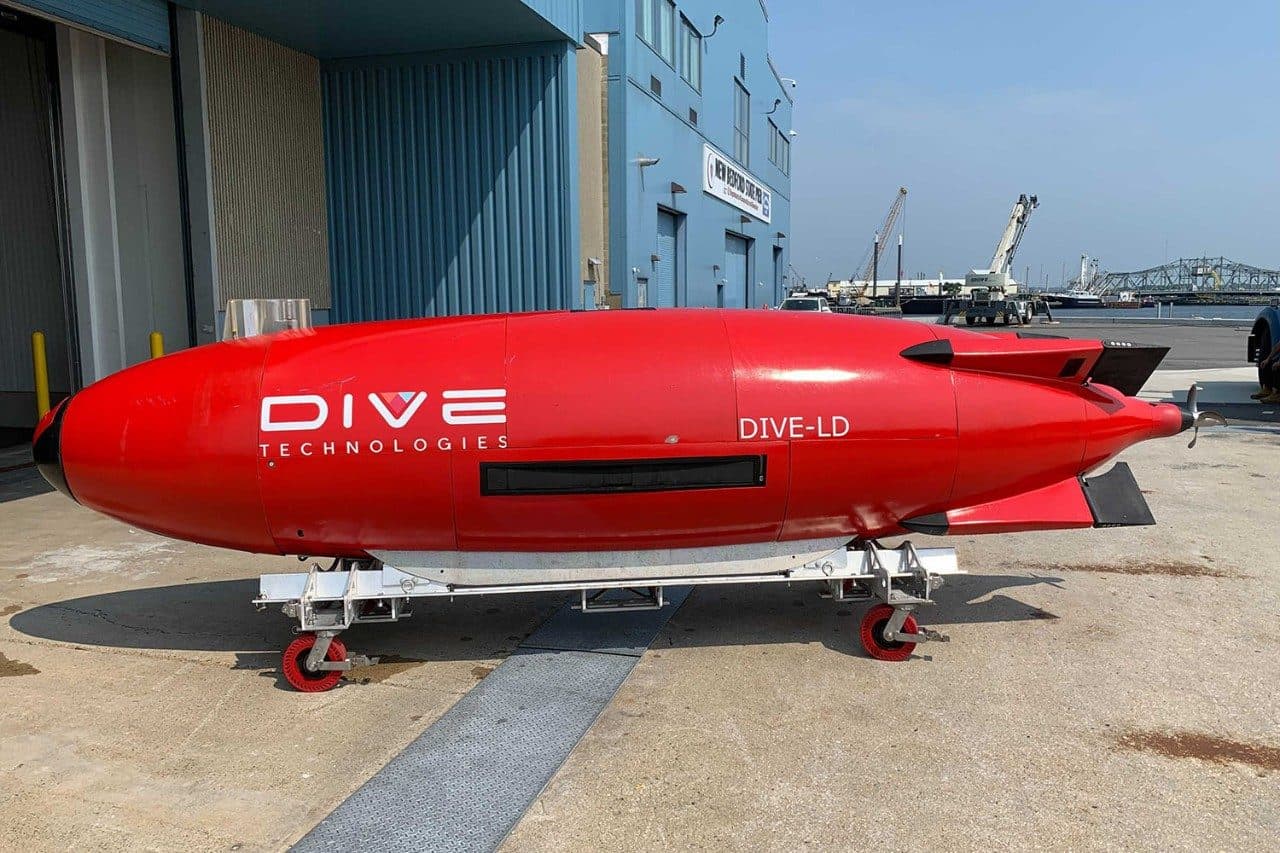
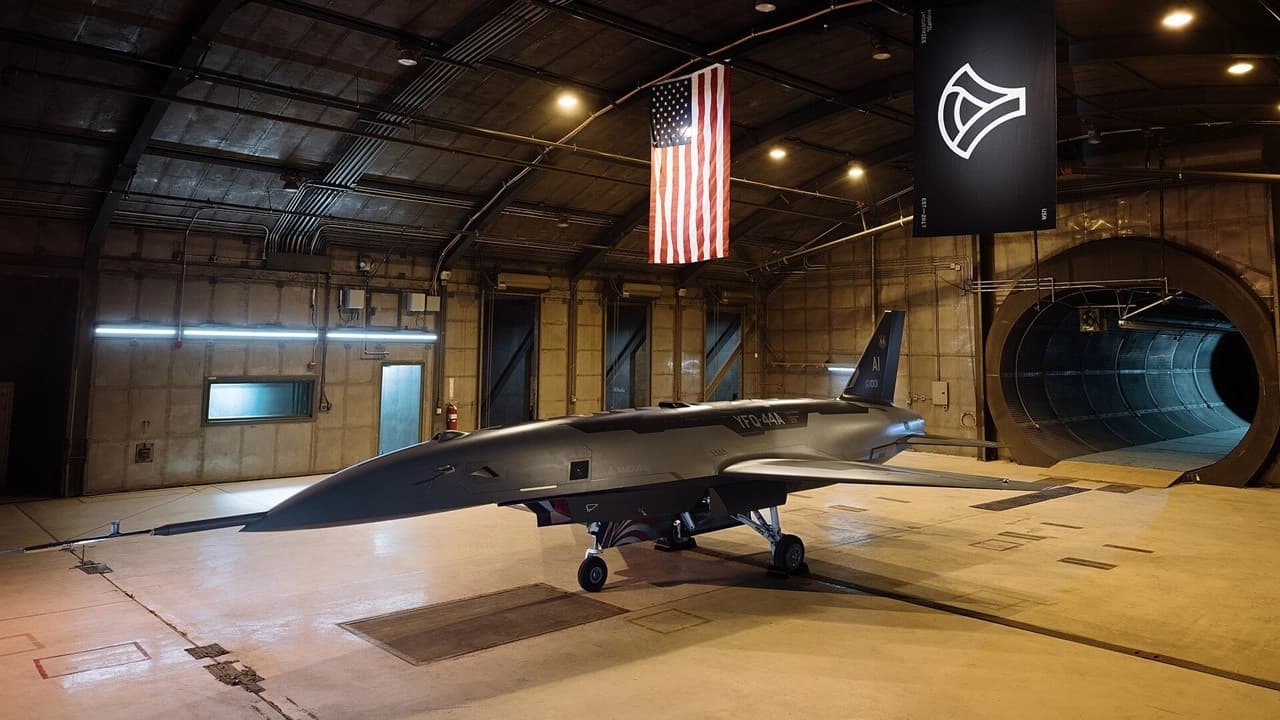
Meanwhile, Anduril was developing new products at a pace the defense industry wasn't used to seeing. Roadrunner — a twin-turbojet interceptor that takes off vertically, hunts enemy drones, and lands to be reused if it doesn't find one — went from concept to combat evaluation in under two years. Anduril spent roughly $80 million of its own money developing it before the Pentagon ordered more than 500 units in a $250 million contract. Barracuda is a cruise missile with a range over 500 nautical miles that can be launched from fighter jets, helicopters, or cargo planes, designed from the start to be built cheaply enough to produce in the thousands. And Fury — an autonomous jet with a 17-foot wingspan that flies combat missions without a pilot — beat Boeing, Lockheed, and Northrop for a spot in the Air Force's Collaborative Combat Aircraft program, then flew its first semi-autonomous mission in October 2025.
Every one of these products runs on Lattice. Every deployment generates data that makes Lattice smarter. Every contract builds the trust that opens the door for the next one. This flywheel is what makes acquisitions so accretive.
Packy McCormick captured it best when he called Anduril “a meta-version of Lattice.” On the battlefield, Lattice integrates sensors and autonomous systems into a single picture. At the company level, Anduril integrates the defense market itself — bridging the gap between the DoD's $300 billion annual procurement budget and the startups building the technology the military actually needs, through a layer of trust, clearances, relationships, and integration work that took eight years to construct.
“Because returns are so punctuated and creating hardware takes many years to get right and to become trusted within a field, acquisitions accelerate your positioning against those big punctuated movements,” Anduril's CRO Matthew Steckman has said. “The more it's out there and working, the more you get this interesting social effect on trust.”
Anduril's recently signed $20 billion Army contract consolidates more than 120 separate procurement actions into a single deal. Revenue should hit $4.3 billion in 2026, roughly double 2025, and it has raised more than $7 billion of capital as it positions itself to be the first new prime defense company created in over one hundred years.
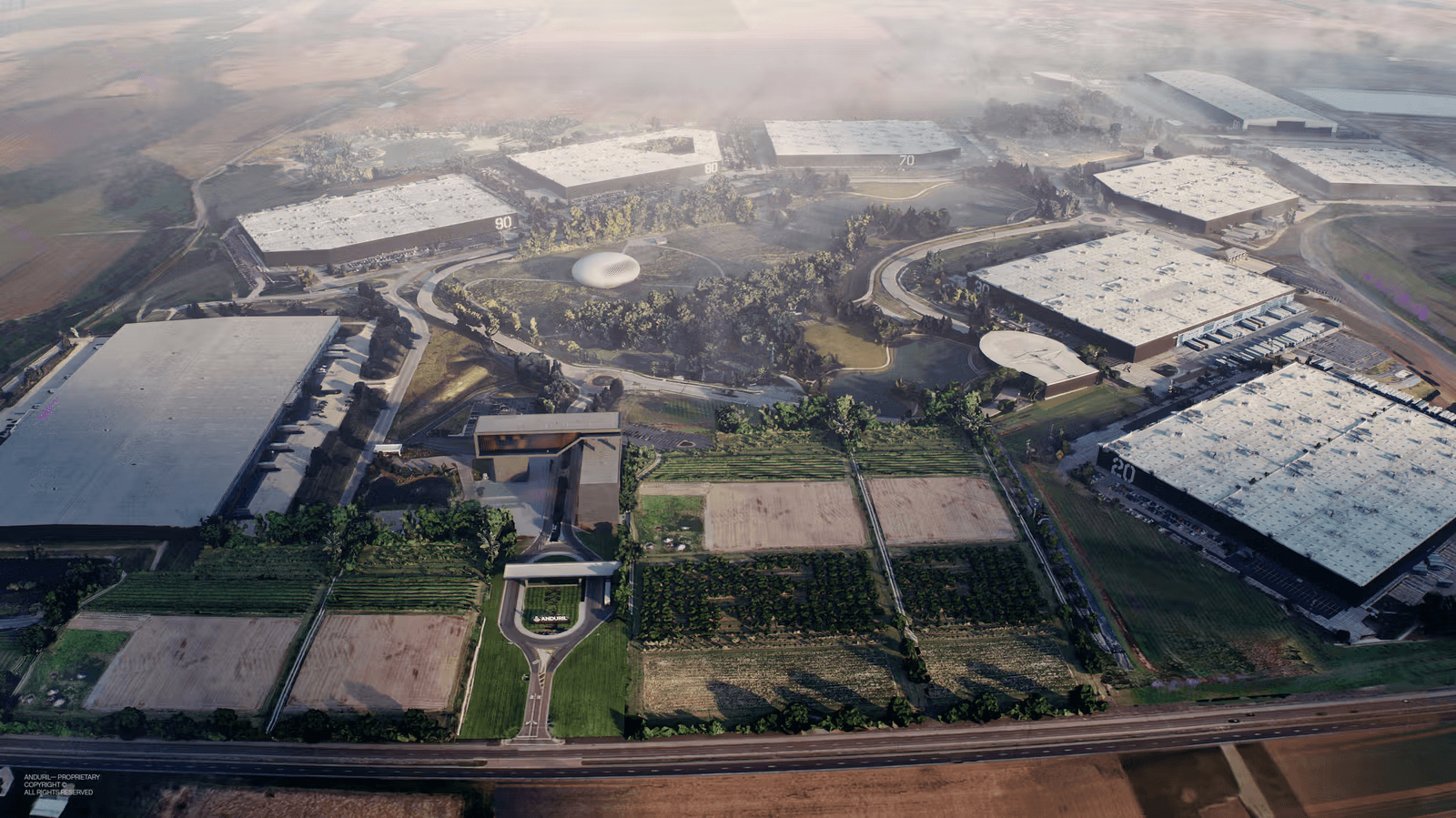
Now Anduril is building the factory to match that ambition. Arsenal-1 occupies 700,000 square feet of Cold War-era hangars at the former Rickenbacker Air National Guard Base in Ohio, next to two 12,000-foot runways originally built for bombers carrying atomic weapons. The full campus will reach five million square feet. When production begins later this year, the same lines will manufacture drones, jet fighters, missiles, and submarines. The name is a deliberate nod to the early 1940s, when Roosevelt called the American industrial base the “Arsenal of Democracy” and the country was building a destroyer every four days.
In eight years, the company went from four towers on a rancher's fence to a $20 billion Army contract and a hyperscale defense manufacturing facility.
The Future of Warfare
In 2003, the U.S. invaded Iraq with more than 130,000 troops, hundreds of tanks, and squadrons of F-15s, F-16s, and B-2 bombers. The war cost over $2 trillion. The vehicles were crewed, the munitions were dumb or laser-guided, and the intelligence came from satellites and human scouts. It was, in most respects, a 20th-century war fought with 20th-century equipment.
Twenty years later, the nature of warfare has changed beyond recognition. In Ukraine, cheap drones assembled in garage workshops are responsible for 70-80% of all battlefield casualties. They cost about $400 each, and a single one can disable a tank worth millions. Ukraine produced over 4 million drones in 2025 from a network of domestic manufacturers and is targeting 7 million in 2026. In the Red Sea, Houthi drones costing a few thousand dollars have tied up American missile defense systems costing several million dollars per intercept.
The era of small numbers of exquisitely-engineered, expensive platforms is giving way to an era of mass-produced, software-coordinated, autonomous systems. As one British military intelligence source told the press, “We have seen a glimpse of the future, and drones will dominate the battlefield.”
Palmer Luckey has been thinking about what comes after that glimpse since long before he had the resources to build any of it. He talks about the future of war the way he talked about virtual reality in 2012 – he cites the science fiction, then explains why the technology has finally caught up. “For years there's been this science fiction trope of conflict in the future being defined by large numbers of swarming drones or autonomous systems,” he has said. “But it's not just a sci-fi trope. This is also what a lot of war planners and a lot of people looking at the military believe is going to be the future.”
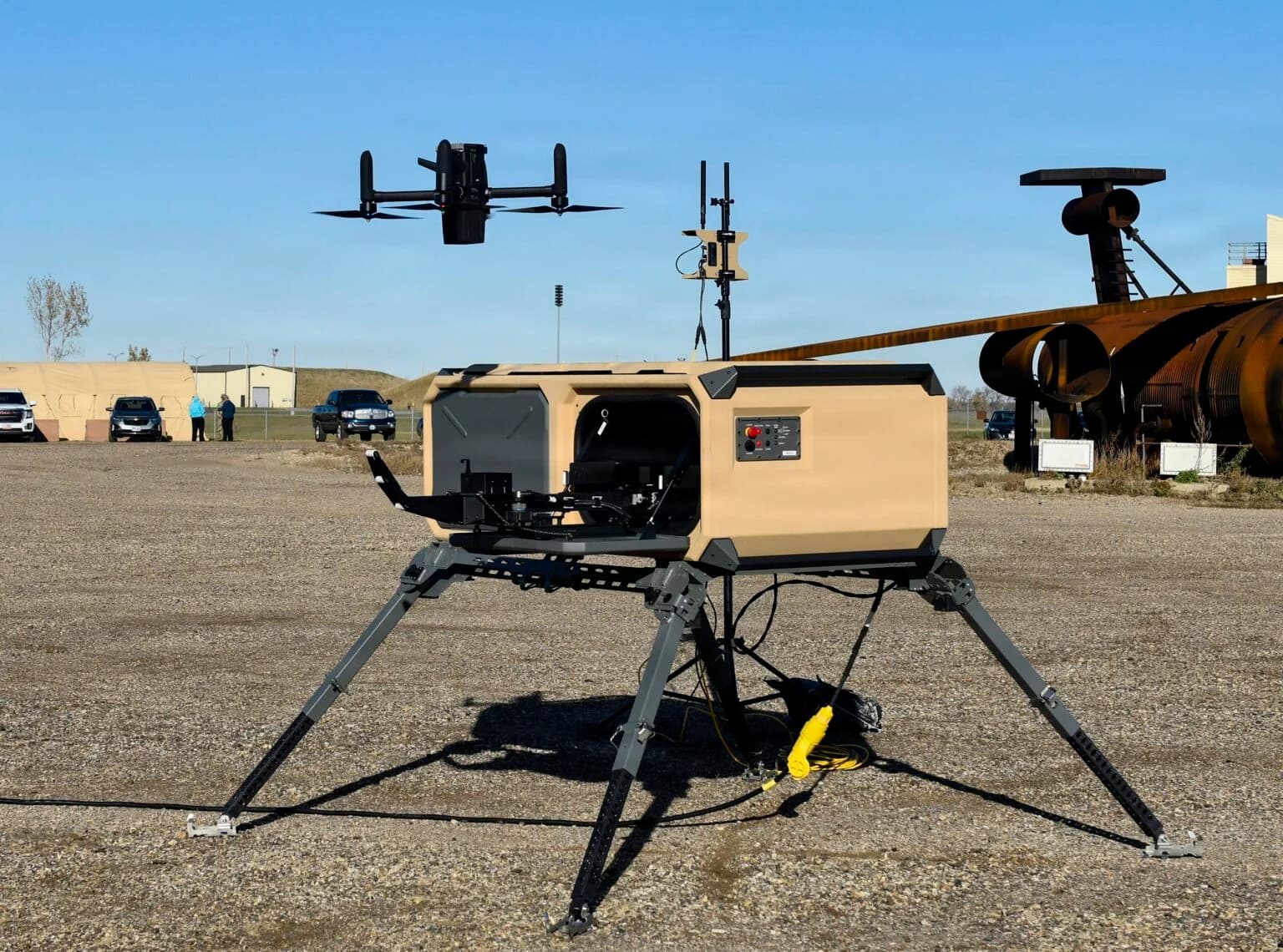
Every product Anduril builds maps to a specific vision of where warfare is heading, and Luckey often cites the science fiction that described it first.
Heinlein's Starship Troopers imagined soldiers in powered armor that made them faster, stronger, and harder to kill than any unaugmented human. Where Heinlein augmented the body, Luckey is augmenting the senses. When Anduril took over the Army's headset program from Microsoft, which had spent years and billions of dollars failing to make it work, he described his vision on his blog: “Not just day and night and thermal and ultraviolet, but peering into an idealized interactive real-time composite of past, present, and future that will quickly surpass traditional senses like vision and touch. Put another way, Superman doesn't use menus – he just sees and does.” The first EagleEye headsets, co-designed with Oakley, ship to soldiers this year at roughly half the per-unit cost the Army expected. A soldier wearing EagleEye can see in thermal and ultraviolet, see through walls, and coordinate with robotic teammates through the same Lattice interface that connects every other Anduril system.
Luckey calls the Air Force's Collaborative Combat Aircraft program “loyal wingman.” A pilot flies an F-35 with several autonomous Fury jets in formation. They carry the same sensors and weapons the pilot does, but they fly ahead as the front line. If the pilot needs to clear a corridor through enemy air defenses, the unmanned fighters go first – absorbing the risk, drawing fire, sacrificing themselves to open a path. “Imagine playing chess and you couldn't sacrifice your pawns,” is the analogy Luckey invokes. Autonomous wingmen remove that constraint.
Beyond air and land, Luckey sees warfare expanding into domains most militaries haven't seriously planned for. He believes the earth's surface will eventually become too surveilled for conventional operations, pushing conflict underground. “There's a lot more crust than there is air or sea or surface of land,” he argues. He also sees America's military presence in space evolving into something like Star Trek: “doing exactly what the United States Navy does on Earth, but in a growing space economy.”
The World's Gun Store
“I don't really want to be doing Anduril,” Luckey confessed to Patrick O'Shaughnessy on the Invest Like the Best podcast. “I would rather be making virtual reality headsets, video games, toys, fast cars, spaceships – that's what I want to be doing. I'm doing what I'm doing with Anduril because I think it's important and going to be more impactful.”
What made it important was a problem most people in Silicon Valley didn't want to see. In the mid-2010s, every major American technology company was chasing the Chinese market. They were building censored products for Chinese consumers, manufacturing hardware in Chinese factories, and taking Chinese investment. When Google pulled out of Project Maven in 2018, the public reason was employee opposition to working with the military, but Luckey believed there was a different explanation. “Tech companies refused to do any work with the United States military not because they thought it was unethical,” he told Rick Rubin on the Tetragrammaton podcast. “It was a business decision. They said, ‘I'm not going to work with the US military because if I do, China won't let me make money.’” The employee protests gave executives cover to do what the financial incentives called for. The result, as Luckey put it, was that “Silicon Valley executives would have had more foreign policy power than the President of the United States.”
Anduril was founded to fill that gap, and the bet captured in the company's name – a weapon, reforged and placed in the right hands, can save the world – is ultimately a bet on deterrence.
“I've always said we need to transition from being the world police to being the world gun store,” Luckey explains. The goal is to make America and its allies into what he calls “prickly porcupines – so that no one wants to step on them.” If the weapons are cheap enough and effective enough, the cost of invading a country becomes prohibitively high. Wars that never start don't produce casualties.
Ukraine is the painful illustration of what happens when deterrence fails. If Ukraine had been armed with millions of cheap autonomous drones before February 2022, it is difficult to imagine Russia invading. Instead, Ukraine had to build that capacity from scratch during a war, assembling 4 million drones a year from garage workshops while its cities were being bombed. Anduril's vision is to make sure no ally ends up in that position.
“What if instead of a $60 billion aid package for Ukraine, it was a $1 billion aid package, and it was 10 times as effective?” Luckey asked Jeremy Stern in his excellent profile in Tablet Magazine. “If you're building the right mass-produced, very cheap loitering munitions that are always able to do the job at a hundredth or a thousandth of the price of an existing system, at some point the justification for withholding aid goes away.”
That vision extends beyond American defense spending. Anduril has contracts with the Royal Australian Navy ($100 million for autonomous undersea vehicles), the UK Ministry of Defence, the Royal Marines, and a growing list of allied nations – the “prickly porcupines” taking shape. In September 2019, drones attacked two major Saudi oil refineries, temporarily halving the country's oil production – a reminder that the threat of cheap, autonomous weapons isn't limited to the battlefield. Any facility that needs autonomous, 24/7 perimeter surveillance, from oil pipelines to nuclear power plants, is a potential Anduril customer.
Luckey also argues that autonomous weapons are more moral than what they replace: “There's no moral high ground to making a land mine that can't tell the difference between a school bus full of children and Russian armor.” A weapon with onboard AI can identify what's in front of it and choose not to fire.
As for what happens when the most capable weapons manufacturers in the world are venture-backed startups accountable to private investors, Luckey has thought about this more carefully than most people give him credit for. “You shouldn't want that decision to be up to me,” Luckey has said of which countries Anduril sells to, “ because I am the top executive of a for-profit private corporation. You should want that to be decided by government officials who are elected by the body populace and are accountable to them – who, when they make bad decisions, can be removed through an election. You can't remove me from Anduril if you disagree with my decisions.”
Anduril's position is that it will build what the elected government asks for and let the democratic process set the boundaries. That position will be tested, and the founders who follow Anduril into defense should be prepared for that test.
A Call to Founders
Andreessen Horowitz has invested in every Anduril round since the Series D-1 in 2022, including the current raise at $60 billion alongside Thrive Capital. Katherine Boyle's American Dynamism practice is built on a conviction we hold deeply: the most important companies of this decade will be the ones that rebuild national capacity in defense, energy, manufacturing, and infrastructure. Anduril is the flagship of that conviction.
In 2017, the conventional wisdom said Silicon Valley couldn't build defense hardware, couldn't navigate procurement, couldn't manufacture at scale, and would bail the moment things got politically uncomfortable. Anduril proved every one of those assumptions wrong. But they cannot close the gap alone.
Brose's proposal for a “Moneyball Military” envisions two procurement tracks: the traditional system for legacy platforms, and a market-driven system for autonomous vehicles, small satellites, robotic systems, and commercially derived military tech. That second track needs hundreds of new companies.
The defense budget is $867 billion and rising. Ukraine proved that drone warfare rewrites military doctrine in real time. The Red Sea showed that a drone costing a few thousand dollars can tie up a missile defense system worth millions. Every wargame on Taiwan arrives at the same conclusion: the side that runs out of munitions first loses.
Venture-backed companies received less than 1% of the $411 billion in DoD contracts awarded in 2023 – barely up from 0.5% in 2010. The market is enormous and almost entirely untapped. The opportunity is not to build another Anduril. It is to build what Anduril can't build alone – in autonomous systems, electronic warfare, directed energy, undersea vehicles, satellite constellations, and manufacturing automation. The funding is there: from defense-focused VCs to the DoD's own startup programs to government contracts that are getting larger every year.
The tactical lessons from Anduril's history:
Start with a real customer and a real product. Anduril didn't try to win a fighter jet contract on day one. They started with a surveillance tower on a rancher's fence and let traction build the case. “Don't be afraid to convince yourself that your business is incredible,” Luckey has said, “but don't expect others to be convinced without solid data to back it up. Ideas can be worth a lot, but they are usually not. Execution is everything.”
Wrap the software in metal. Trae Stephens learned early that the DoD has “almost a moral aversion to paying software margins.” But it will pay high prices for hardware. Anduril's real value is Lattice – the software – but it sells hardware that runs on Lattice. “We use that as a Trojan horse to get software in the front door,” Stephens has said. If you're building software for defense, figure out what piece of hardware makes it buyable.
Try to find opportunities that compound. Every product Anduril ships extends Lattice, and every extension makes every other product more valuable. Schimpf's mesh networking patent, built to solve a border surveillance problem, now runs inside submarines and fighter jets.
Give engineers ownership. Schimpf borrowed this from Palantir and made it core to Anduril's culture: give young, ambitious engineers full ownership of outcomes. “It's shitty work, but it's your shitty work,” he told Arena Magazine. “There are all these hard things like showing up late at night, upgrading things, racking servers. If you described that job to anyone, they would say this is a terrible low-level job. But if you say, ‘no, no, no, you own this, do whatever you've got to do to succeed,’ it's actually extremely rewarding.”
Don't assume the best product wins. “People want to believe that if you build the best thing, then you'll win,” Luckey has said. “That's not the way that the real world works.” In its first few months, Anduril hired more lawyers and lobbyists than engineers. It was a deliberate choice to learn how to navigate the institution before trying to sell to it. Eight years later, that investment in trust, security clearances, and government relationships is as much a part of Anduril's moat as Lattice is.
Science fiction is a rich place to look for what to build next. “Literally, nothing we've ever done has been something that was not exhaustively covered in science fiction,” Luckey told reporters last year. “You'll never come up with anything new when you're in my industry.” The future of war has been described in detail for a hundred years. The job was never imagining it. It was to know when the technology caught up to the fiction, and then build it. Luckey has also called Chris Brose's The Kill Chain“a must-read book for anyone concerned about the erosion of U.S. military dominance.”
Building weapons to protect a democracy is among the most technically challenging, most consequential, and most important work an engineer can do. The best people in the country will sign up for it. The DoD will buy from companies that move fast. Anduril proved all of this.
Now it's your turn.